
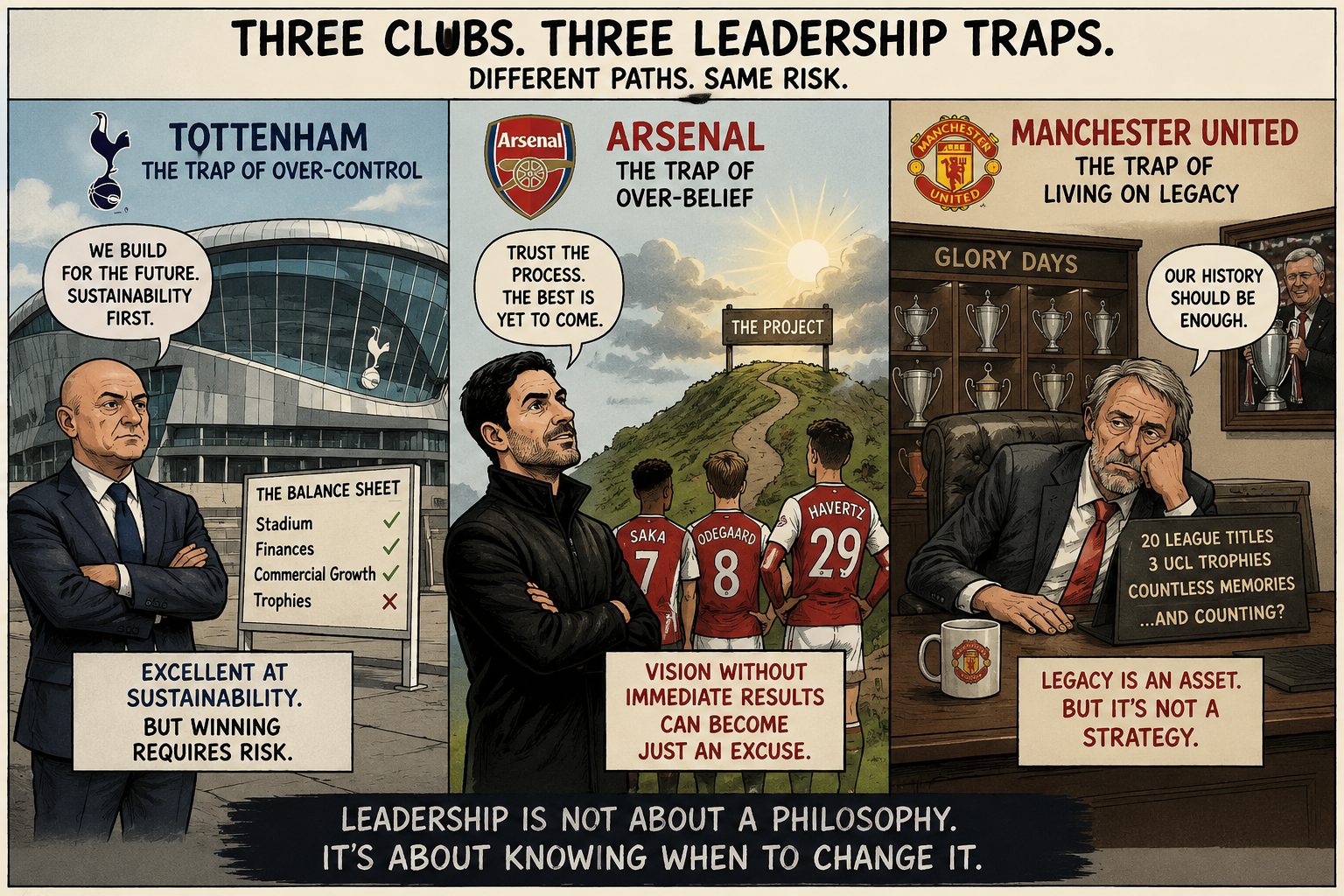
In the realm of football, Arsenal F.C., Manchester United F.C., and Tottenham Hotspur are often recognised as fierce rivals. However, beyond the jerseys and matches, for those of us who have no jersey or support any F.C, but who have a keen eye on leadership dynamics, these clubs illuminate profound truths about success and failure in organisational leadership. Each club embodies a distinct leadership trap, serving as a cautionary tale for executives everywhere.
Tottenham Hotspur: The Peril of Over-Control
Tottenham, under the watchful eye of Chairman Daniel Levy, presents a classic case of the dangers of excessive control. The club was known for its disciplined approach, building a reputation for disciplined management, robust infrastructure, financial prudence, and well-structured decision-making. They became masters at protecting their infrastructure. They seemed wise. But wisdom has its limits, and for Spurs, the line between prudence and paralysis became alarmingly thin.
Caution morphed into hesitation.
There is a fine line where caution becomes fear. Sometimes, the quest for sustainability can overshadow the ultimate goal: victory, and this led to the Spurs’ worst season in more than 50 years.
Defeat would leave the door open to relegation. Their relentless focus on avoiding risks left them frozen, forgetting that the ultimate purpose is to dominate the field, not just survive the season. In their caution, they’ve forgotten how to chase glory. In football, as in business, organisations may become so fixated on self-preservation that they forget the essence of their purpose, leading to market and winning.
Arsenal F.C.: The Trap of Blind Optimism
In contrast, Arsenal illustrates the risks of misplaced belief whose tale swings in the opposite direction. Their challenge has been a surplus of belief, often selling the promise of a champion before delivering the performance. For years, they marketed visions of glory, bolstered by a strong identity and a loyal fanbase, while insisting success was just around the corner.
Under Mikel Arteta, some of that belief has started to pay off, but this reliance on hope can be dangerous when it replaces tangible evidence. Vision without proof is just a dream, and hope is certainly no strategy. Patience can also sometimes morph into peril. This is a lesson that often leaves leaders squirming in their boardroom seats. Many CEOs face similar choices: some are overly disciplined, claiming responsibility, while others spin tales of bright hopes, dreams, and visions.
Manchester United FC: The Weight of History
They teach the most expensive lesson of all: the peril of living on legacy. For too long, the club operated under the illusion that historic greatness could substitute for present competence. A global brand with a storied past, they clung to the belief that the glories of yesterday still wielded authority today. As managers came and went, as executives shuffled, and players changed, the institution continued to act as if its reputation itself was sufficient strategy. This is the classic boardroom trap: mistaking legacy for competence. Legacy can serve as a valuable asset until it becomes a sedative, and a good reason to stay the same. When an organisation begins to preserve nostalgia rather than cultivate capability, its decline is invisible because the brand remains famous and its doom might be nigh.
Different arenas, Same failures.
Some CEOs cloak themselves in the spirit of Tottenham: very committed to preserving existing systems, which halts progress.
Others take a cue from Arsenal: selling belief in the grand narrative: We are building for the future.
Then there are those akin to Manchester United: dwelling in past glories while performance wanes.
But here lies the truth: Leadership is not about protecting the elements that propelled your success. It is the audacity to confront when that success morphs into your greatest blind spot.
Control can spiral into paralysis.
Patience can devolve into an excuse.
Legacy can breed arrogance.
The most dangerous failure is believing your old formula still works.
Dr. Judith Ogedegbe
Leadership Impact Advisory